If you have ever wondered why one Wellington farm feels effortless while another feels cramped, the answer is usually not just acreage. In this market, a true equestrian compound is designed to work under real show-season pressure, with horses, staff, guests, trailers, and daily routines all moving smoothly at once. Understanding that anatomy can help you evaluate a property more clearly, whether you are buying, planning improvements, or preparing to sell. Let’s dive in.
Why Wellington Design Is Different
Wellington is shaped by an equestrian ecosystem that is unusually concentrated and highly seasonal. The Village of Wellington describes an equestrian community with more than 580 farms, peak-season horse counts near 13,000, and an equestrian season that generally runs from November through April. That local scale helps explain why property design here tends to be more specialized than in a typical luxury acreage market.
Wellington also treats equestrian land use as part of its identity. The village describes the Equestrian Preserve as an exurban environment intended to keep horses close to competitive arenas, which is a major reason proximity and circulation matter so much when you assess a farm. In practice, the best compounds are not just beautiful. They are organized around performance, access, and day-to-day efficiency.
Wellington’s showground infrastructure reinforces that standard. Wellington International says its venue spans 111 acres with 14 competition arenas and more than 500 permanent stalls, along with hospitality, dining, event space, and luxury shopping. In a setting like that, private farms often need to function as both serious training facilities and polished entertaining environments.
The Core Layout of a Modern Compound
At the highest level, a modern Wellington equestrian compound usually succeeds because it separates uses clearly. Horses need safe, direct movement between barn, arena, paddock, and trails. People need intuitive arrival sequences, comfortable living spaces, and parking that does not interfere with equine operations.
Official Wellington site plans for major equestrian projects reflect that logic. They group barns with schooling rings, lunging rings, covered arenas, maintenance and quarantine areas, service roads, parking, horse-and-cart paths, and connections to existing bridle paths. Even on a private farm, the same principle applies: the smoother the circulation, the better the property performs.
Barn Placement Matters
The barn is the operational heart of the property, so placement is everything. In a well-planned compound, the barn sits close to the primary training surfaces to reduce unnecessary walking time and avoid traffic conflicts. That is especially important during Wellington’s busy winter circuit, when time, footing conditions, and daily efficiency all matter.
The best layouts also avoid forcing horses to cross guest areas or vehicle routes. Instead, barns are typically positioned so horses can move directly to arenas, lunging areas, and paddocks through dedicated paths. This creates a calmer environment and supports a more predictable daily routine.
Arenas and Schooling Spaces
A modern compound often includes more than one training area because different uses call for different surfaces and layouts. Wellington’s larger planning examples reference competition rings, derby fields, lunging areas, and schooling zones, which shows how much emphasis the local market places on specialized riding space. Even at a smaller private scale, buyers often look for a main arena plus support areas that make training easier and safer.
The key is not just size. It is how well the arena works with the rest of the site. A riding ring that looks impressive on paper can still underperform if trailer circulation cuts too close to it or if horses have to pass through parking areas to reach it.
Traffic Flow and Service Access
One of the clearest markers of a sophisticated Wellington farm is traffic separation. Major local equestrian planning documents emphasize internal roads, bridle trails, golf-cart paths, and buffers between active use areas and residential spaces. That same thinking carries over to private compounds, where vehicle access can make or break the daily experience.
A strong site plan often includes separate routes for:
- horse movement
- trailers and service vehicles
- staff parking
- guest arrival
- golf-cart circulation
When those routes are blended together, even a beautiful property can feel hectic. When they are separated, the farm feels quieter, safer, and more polished.
Barn Complex Features Buyers Notice
In Wellington, the barn complex often functions as more than a barn. It may also serve as a workspace, a hospitality zone, and part of the property’s broader lifestyle appeal. That is one reason so many successful compounds feel coordinated rather than purely utilitarian.
Wellington’s stable and manure bin checklist reflects this expectation. It requires accessory structures and stables to use the same colors and building materials as the principal structure, calls for a minimum 3:12 roof pitch on conditioned space, and discourages reflective glass or film. Utility elements such as meters and conduits must also be mounted and painted in a way that blends with the building.
Estate-Like Design Language
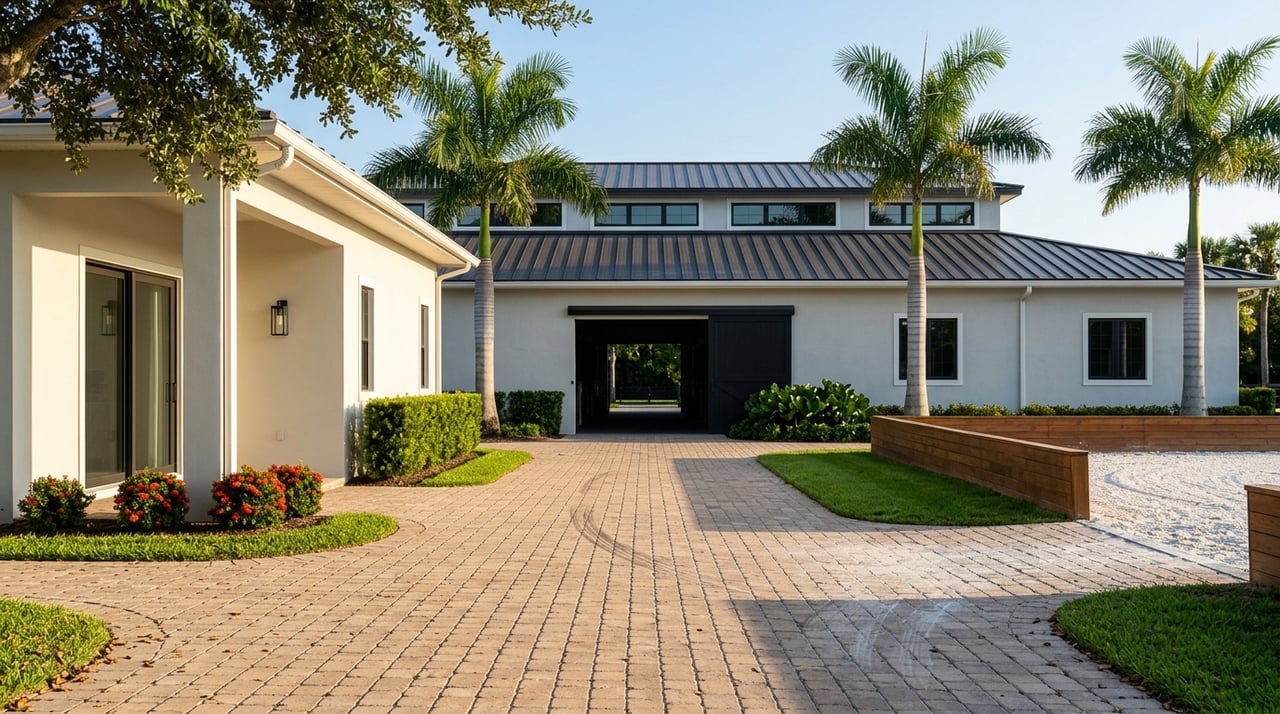
These rules help explain why many Wellington farms read as complete estate compounds rather than basic agricultural properties. The visual harmony between house, barn, cabanas, and support structures matters. Buyers often respond strongly to that consistency because it makes the entire property feel intentional and well executed.
That does not mean style outweighs function. It means the strongest compounds combine both. A barn should still work hard, but in Wellington it is also expected to present well.
Integrated Living and Working Spaces
The local permitting language also recognizes the idea of a stable with residence and a stable without residence. That distinction matters because it reflects a common Wellington reality: integrated living and working arrangements are often part of the property concept, but they still depend on zoning, plat restrictions, and any applicable association rules.
For buyers, this means staff or rider accommodations should never be treated as an afterthought. On-site living can be a major advantage for horse care, scheduling, and convenience, especially during the busiest months of the season. For sellers, clearly documenting what is permitted can help avoid confusion and strengthen buyer confidence.
Lifestyle Spaces Are Part of the Program
Modern Wellington compounds are rarely just about stalls and arenas. They are also about how people experience the property, from early training hours to evening entertaining. That is where lounges, viewing areas, guest space, and support amenities can meaningfully shape value.
Wellington International’s emphasis on VIP hospitality, dining, and event space shows how deeply hospitality is woven into the local equestrian culture. On private farms, that often translates into barn-adjacent gathering areas, comfortable observation points, and separate arrival experiences that allow the property to feel both operational and welcoming.
In practical terms, a successful compound often gives you distinct zones for:
- daily horse care and training
- private family living
- staff support
- guest arrival and entertaining
When those zones are balanced well, the property can handle serious equestrian use without losing its sense of calm.
Privacy, Buffering, and Presentation
A modern Wellington farm should feel composed from the moment you arrive. That usually comes down to buffers, setbacks, landscaping, and visual control. Current local planning documents reference a range of setback standards in different contexts, which is best understood as evidence of how much Wellington values privacy, spacing, and separation of uses rather than as one rule that fits every parcel.
For you as a buyer or seller, the takeaway is simple: a farm should not feel crowded. There should be enough room for parking, trailer turns, manure handling, horse movement, and daily work areas without disrupting the residential side of the property. That spatial breathing room is part of what makes a compound feel refined.
Drainage and Compliance Are Essential
A Wellington equestrian compound has to perform in wet conditions, not just photograph well on a sunny day. The village notes that it works to improve drainage systems to help prevent flooding, and the Equestrian Preserve Committee advises on flooding, drainage, and design issues in preserve areas. The stable permit checklist also requires attention to flood zone and proposed floor elevation.
That makes drainage one of the most important parts of due diligence. Before you fall in love with stall count or a pretty barn aisle, it is worth understanding how the property handles water, where runoff moves, and whether the site can support peak-season use without mud, crowding, or operational bottlenecks.
Wellington also emphasizes property and development standards through its code-compliance framework. In real terms, that means buyers should review not just the physical improvements, but also permit status, restrictions, and how the property aligns with current standards. Sellers benefit from the same preparation because orderly documentation reduces friction during a transaction.
What Buyers Should Evaluate First
When you tour a Wellington equestrian property, it helps to think like an operator before you think like a decorator. The visual finish matters, but the layout tells you whether the farm will actually function well during the season.
Start with these questions:
- How do horses move from barn to arena to paddock?
- Are horse routes separated from guest and vehicle traffic?
- Is there adequate space for trailer access and parking?
- Can staff support the operation efficiently on site?
- Do the residential and entertaining areas feel private from the working barn zones?
- Has drainage and flood-zone planning been addressed?
If the answers are clear and the layout feels intuitive, the property is often on the right track. If movement patterns feel awkward during a quiet showing, they may feel much more difficult during peak season.
What Sellers Should Highlight
For sellers, the best presentation goes beyond luxury finishes. In this niche, sophisticated buyers notice circulation, support spaces, and practical details very quickly. A farm that is easy to understand usually feels more valuable because buyers can picture using it immediately.
That means your strongest selling points may include:
- separate service and guest access
- coordinated materials across the residence and accessory structures
- clear organization of barns, arenas, and paddocks
- orderly manure and maintenance areas
- thoughtful privacy buffers
- documentation around permits, restrictions, and property configuration
This is also where specialized representation matters. A technically informed marketing approach can frame the property not just as acreage with improvements, but as a coherent, show-ready compound designed for the realities of Wellington.
Why Specialist Guidance Matters
Wellington equestrian real estate is a category where subtle differences carry real weight. Two properties may look similar in photos and still perform very differently in practice based on circulation, barn placement, buffering, drainage, and compliance details.
That is why a modern compound should be evaluated as both a lifestyle property and an operating facility. If you are buying, that lens helps you avoid expensive surprises. If you are selling, it helps position the property with the kind of precision that serious equestrian buyers expect.
If you are considering a purchase, sale, or strategic upgrade in Wellington, David Welles offers confidential, technically informed guidance tailored to equestrian compounds and luxury estates.
FAQs
What makes a Wellington equestrian compound different from a standard luxury farm?
- A Wellington compound is typically designed around show-season performance, with careful separation of horse movement, vehicle circulation, staff support, hospitality space, and residential privacy.
What should buyers look for in a Wellington barn layout?
- Buyers should focus on how efficiently horses move between the barn, arenas, paddocks, and trails, while also checking whether guest and vehicle traffic stay out of those routes.
Why is drainage important for Wellington equestrian properties?
- Drainage matters because a property needs to stay functional during wet conditions and heavy seasonal use, and local review processes also emphasize flooding, drainage, and site configuration.
Can a Wellington stable include living space on site?
- Wellington’s permitting language distinguishes between a stable with residence and a stable without residence, but what is allowed depends on zoning, plat restrictions, and any applicable association rules.
Why do Wellington equestrian properties often look like estate compounds?
- Local design standards require stables and accessory structures to use coordinated materials and colors with the principal structure, which helps create a more unified estate-style appearance.
How can sellers make a Wellington horse property more marketable?
- Sellers can improve marketability by presenting clear circulation, privacy buffers, coordinated buildings, organized service areas, and accurate documentation that helps buyers understand how the farm operates.