If you plan to sell a Wellington equestrian farm this season, you know it is not a typical home sale. Buyers here arrive with sharp eyes for arenas, drainage, barns and daily workflows, not just kitchens and paint. With a focused plan, you can present your property as show-ready, reduce surprises during due diligence, and capture attention during peak season. Here is a clear, Wellington-specific roadmap to get you market-ready with confidence. Let’s dive in.
Why Wellington buyers are different
Wellington is a true equestrian hub with a designated Equestrian Preserve and an Equestrian Overlay Zoning District that shape how barns, arenas and accessory uses are built and operated. Understanding where your property sits within this framework matters for disclosures and buyer confidence. Review the Village’s overview of the Equestrian Preserve to ground your prep.
Seasonality is a major advantage. The Winter Equestrian Festival draws national and international riders, owners and trainers for weeks of competition. Aligning your listing window with the announced WEF season dates can increase qualified foot traffic and private showings.
Buyer priorities also differ. Function often outranks finishes. Sound footing, drainage, fencing, secure barns, and staff accommodations weigh heavily in value discussions. If your arena footing is documented and maintained, you are speaking the buyer’s language. Resources like Premier Equestrian’s footing guidance echo what performance buyers look for.
Essential documents to assemble first
Before a contractor steps on site, build a clean digital and physical binder. This alone signals professionalism and can shorten negotiations.
- Zoning and permits: Confirm whether the farm is inside Wellington’s Equestrian Overlay and pull relevant rules and any variances. The Unified Land Development Code’s stable section is a key reference for barns and accessory uses. Share the specific code link for transparency, such as the ULDC stable rules.
- Building records: Gather permits, final inspections and certificates of occupancy for barns, arenas, covered rings, sheds, and any living quarters.
- Flood status: Pull the FEMA flood panel and any elevation certificate if applicable. The Village’s Current Flood Maps page is the starting point.
- Utilities and health: Collect well construction and recent water test results, plus septic installation and pump-out logs. This paperwork is standard buyer due diligence in Palm Beach County.
- Manure management: Include manure hauling contracts and receipts, since the Village requires approved haulers, not regular garbage service. Share your compliance plan and refer buyers to the approved haulers list.
- Insurance: Provide your farm and equine policy declarations and a claims summary if available.
- Access and easements: Map any recorded bridle path access, easements or HOA restrictions.
- Disclosures: Florida requires you to disclose known, non-obvious facts that materially affect value. Completing the standard seller disclosure with supporting invoices and reports reduces risk. See the Florida Bar’s summary of the Johnson v. Davis standard for context on disclosure duties.
Property prep priorities that move value
Safety and structural fixes
Start where buyers start, in the barns. Address roof leaks, structural members, doors and hardware, electrical safety, and waterers or pump reliability. These are immediate red or green flags during first showings.
- Repair damaged trusses or posts, and document licensed work with permits where required.
- Verify GFCI protection and clear electric labeling. Confirm fire extinguishers are current and visible.
- Test generators and irrigation pumps, then place recent service records in your binder.
Arena and footing presentation
Footing quality is often the first serious conversation. Have a footing specialist or arena contractor inspect and produce a short memo on base integrity, laser grading and moisture control. Consistent surfaces reduce buyer objections and can protect price.
- Schedule a professional tune-up before photos and showings if needed.
- Confirm irrigation heads and drag-harrow equipment are functional and staged for inspection.
- Share your daily and seasonal grooming routines. Buyers appreciate documentation, and resources like US Equestrian’s maintenance guidance support best practices.
Barn interiors and stalls
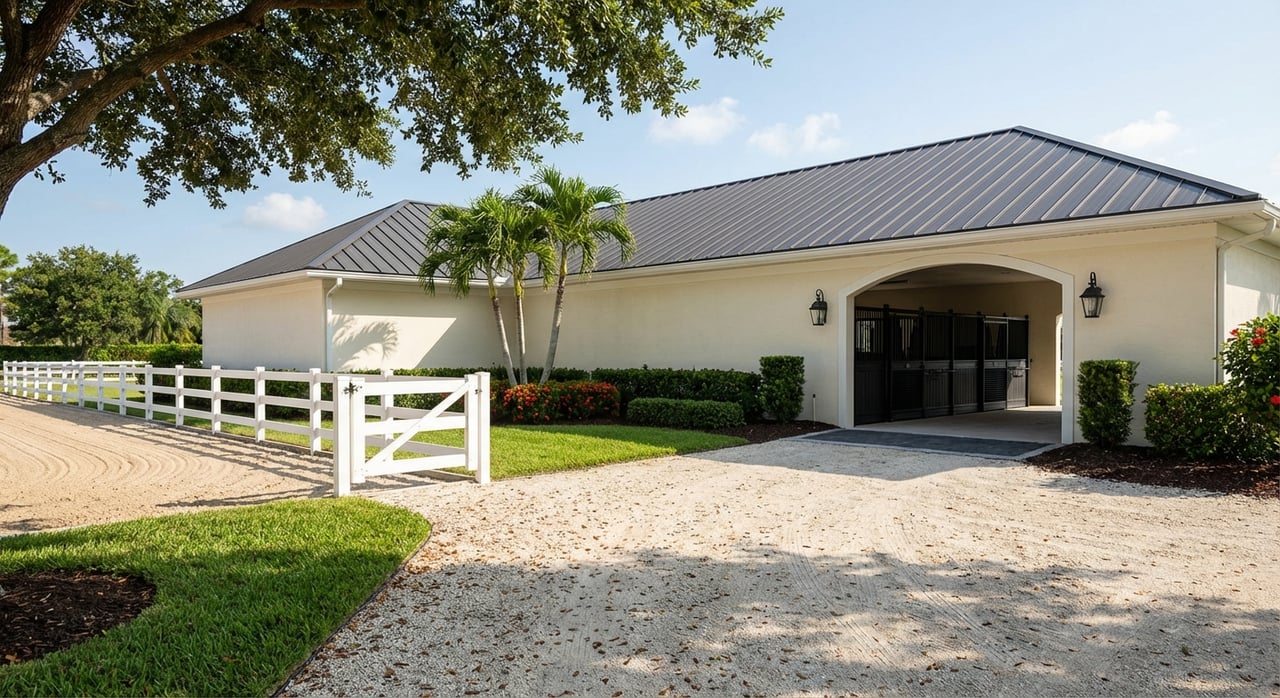
Clean, bright and organized spaces signal low-risk operations. Aim for show-ready barn aisles with swept floors, labeled storage and tidy tack rooms.
- Check wash racks for drainage and hot water function. Replace worn hoses and nozzles.
- Improve ventilation and replace burned bulbs so buyers see light, safe workflows.
- Consider installing or refreshing stall mats where practical. Mats help with presentation and ongoing care, and Stable Management’s overview explains their benefits.
Fencing and turnout confidence
Secure, visible fencing is fundamental. Repair rails, tighten or reset posts and replace missing caps. Focus first on entries, paddocks that front drives and any turnout areas visible from the house or ring.
- Test every gate and latch for smooth function.
- Confirm clear trailer access and parking, including swing radii at gates.
Curb appeal and the residence
While equine systems carry the most weight, first impressions matter. Present a clean driveway, trimmed hedges, fresh entry gate paint and no visible manure piles. If you stage the home, keep it simple and neutral so buyers focus on the operation, not décor.
Manure, drainage and compliance
Wellington sets specific expectations for manure handling. Keep your hauling contract current, store receipts with your binder and be prepared to explain the removal routine. Prospects and their inspectors will ask how you manage waste compliantly. Refer to the Village’s guidance on approved haulers and disposal locations.
Buyers also watch how your site sheds water. Standing water in paddocks or around the arena is a value drag. Walk the property after a rain, confirm swales are open and adjust grading as needed. Drainage that looks cared for helps you defend price.
Photos, video and show-day staging
Invest in professional photography and drone work on a dry day with rings freshly groomed. Stage key scenes that communicate daily life and show-readiness.
- Arena: freshly dragged surface, functioning irrigation, rails aligned.
- Barn: clean aisles, labeled tack storage, tidy wash racks.
- Paddocks: mowed edges, repaired corners, gates squared.
Round out visuals with a short operations summary that covers weekly routines, staffing needs and included equipment. This one to two page document helps buyers envision taking the reins immediately.
Insurance and liability readiness
If you operate boarding or training on site, many buyers and lenders will ask for Care, Custody and Control coverage in addition to your farm package. Organize policy declarations and a brief claims history in advance. Industry resources outline how farm packages and CCC coverage are typically structured, such as this overview of equine farm insurance options.
Timeline to market, aligned with show season
Most farms benefit from a 6 to 12 week prep window, flexed to property size and scope of work. A simple sequence keeps everyone on track.
- Week 1: Document audit and binder. Pull permits, service logs, manure contracts, flood info, and well or septic records.
- Weeks 1 to 4: Safety and compliance repairs. Prioritize barn structure, electrical and any required septic or well remediation.
- Weeks 2 to 6: Arena and exterior tune. Footing laser grade or topdress, fence fixes, grading and irrigation checks.
- Weeks 5 to 8: Staging, photos, drone video and your operations summary.
- Launch: Time your listing to the show calendar if practical. Coordinating with WEF dates can boost in-market exposure.
What a Wellington specialist coordinates
The right listing partner in Wellington goes well beyond standard residential marketing. A specialist will:
- Pre-screen permits and EOZD items. Confirm zoning status, accessory use limits and any variances that impact marketing or transfer.
- Bring a vetted vendor bench. Connect you with arena and footing contractors, barn and electrical pros, fencing teams, approved manure haulers and photographers who handle complex farms.
- Target the right buyers at the right time. Market directly to trainers, owners and international buyers in town for competition weeks, then arrange private showings that respect horses and staff.
- Price with operational nuance. Weigh footing, drainage, fencing, water systems and documented maintenance as core valuation drivers, not just finishes in the residence.
Quick pre-listing checklist
Use this as a working list, then share the completed binder with your agent before you go live.
- Property documents: deed, survey, permits, COs, any variances, easements and bridle path access maps.
- Operations: footing maintenance logs, irrigation diagrams, manure hauling contracts and receipts.
- Health and utilities: recent well test, septic pump-out logs, service invoices for generators and pumps.
- Risk and insurance: farm and equine policies, claims summaries, recent inspection reports.
- Compliance: flood panel and elevation certificate if applicable, completed seller disclosure with supporting invoices and reports.
- Physical prep: structural repairs, footing tune, fence fixes, staging of barns, paddocks and residence.
- Marketing assets: professional photos and drone video, operations summary, equipment inventory.
Ready to list confidently?
With a clean binder, tuned footing, safe barns and clear compliance, your farm will show as a low-risk, high-functioning asset. That is exactly what Wellington buyers reward. If you want a discreet, technically informed plan that aligns with show season and the EOZD framework, connect with a specialist who lives this market every day. Schedule a confidential consultation with David Welles to get a tailored prep and launch strategy for your farm.
FAQs
When should you list a Wellington equestrian farm to reach the most buyers?
- Align your launch with the Winter Equestrian Festival calendar when possible, since in-season weeks concentrate qualified, in-market buyers attending the circuit.
What documents do Wellington farm buyers expect to review before making an offer?
- Zoning and permit records, barn and arena permits, flood panel and any elevation certificate, well and septic logs, manure hauling contracts, insurance declarations and a completed seller disclosure with supporting invoices.
How important is arena footing to a Wellington buyer’s valuation?
- Very important, since performance-focused buyers weigh safe, consistent footing, base integrity and documented maintenance as core operational value, often ahead of interior finishes.
What are Wellington’s manure handling expectations for sellers?
- The Village requires you to use approved livestock-waste haulers and not regular garbage, so keep active hauling contracts and receipts to show compliant removal routines.
Do Florida home and farm sellers have to disclose known issues?
- Yes, Florida law requires disclosure of known, non-obvious facts that materially affect value, so complete the standard disclosure and attach relevant reports and invoices for clarity.