If you have been watching land near Loxahatchee this year, you already know the shorthand version of what happened on July 15, 2026. Palm Beach County commissioners voted 5-1 to deny "Project Tango," the hyperscale AI data center proposed on 200 acres off Southern Boulevard, and residents of the nearby Arden community celebrated a win. The story mostly ends there in coverage of the vote.
It shouldn't. The question a buyer looking at acreage in this corridor needs answered isn't whether commissioners voted no. It's what that no actually changed on the ground, and the honest answer is: less than most people assume.
What The Commission Actually Denied
The vote wasn't a referendum on whether a data center could exist on this site. It was a decision on whether to approve an amendment that would have expanded the Central Park Commerce Center into a roughly 1 million-square-foot data center paired with about 2.3 million square feet of warehouse space, developed by PBA Holdings under the project code name Tango. County commissioners rejected that amendment after a hearing that ran past 12 hours, with Commissioner Maria Marino casting the lone yes vote. She told the board she'd "take the slings of arrows" but still believed the county needed the project.
Mayor Sara Baxter, whose district includes the site, recused herself. The county attorney's office had advised that her prior public statements opposing the project created a conflict in what is legally a quasi-judicial proceeding, the same standard that applies to a judge who has already stated an opinion on a case.
The denial came "without prejudice." In plain terms, that means the applicant can revise the plan and refile. Nothing in the July vote closes that door.
The Entitlement Nobody Voted On
Here is the part that gets lost in the applause. Before Project Tango ever reached a commission agenda, the county had already approved development on this same 202-acre parcel back in 2016, under the name Central Park Commerce Center. That approval covers 206,000 square feet of data center space and 1,814,000 square feet of warehouse space, and it carries no conditions of approval at all. No sound limits. No setback requirements tied to the data center use specifically. Nothing.
When a commissioner asked county zoning staff directly whether the 2016 approval included any conditions, the answer was a flat no. That earlier entitlement was not on the table in July. It wasn't part of what commissioners voted to deny, and it isn't affected by the denial. It can move forward through an administrative review handled entirely by county staff, with no additional public hearing required.
So the honest read of July 15 is narrower than "the data center is dead." It's closer to: the larger, more scrutinized version of the project needs a new vote if it comes back, but a smaller version of the same underlying use already has a green light that never needed public input to begin with.
| What the July 15 vote stopped | What it left untouched | |
|---|---|---|
| Scope | The expanded ~1M sq ft data center + ~2.3M sq ft warehouse amendment | The 2016-approved 206,000 sq ft data center + 1,814,000 sq ft warehouse |
| Review path | Required a public commission hearing | Can proceed through staff-level administrative approval |
| Conditions attached | Included proposed sound limits and other terms debated at the hearing | Carries zero conditions of approval |
| Status after the vote | Can be revised and refiled (denied without prejudice) | Remains valid regardless of what happens to a refiled Tango application |
Why Southern Boulevard And 20 Mile Bend Matter To Buyers
The site sits on Southern Boulevard, roughly four miles west of Seminole Pratt Whitney Road, on the corridor that runs toward 20 Mile Bend, next to Florida Power & Light's West County Energy Center. That plant alone generates 3,750 megawatts, enough to power roughly 750,000 homes, which is part of why this particular parcel was attractive to a data center developer in the first place. Reliable, adjacent power is a rare asset on a stretch of the county otherwise defined by farms, pasture, and low-density residential land.
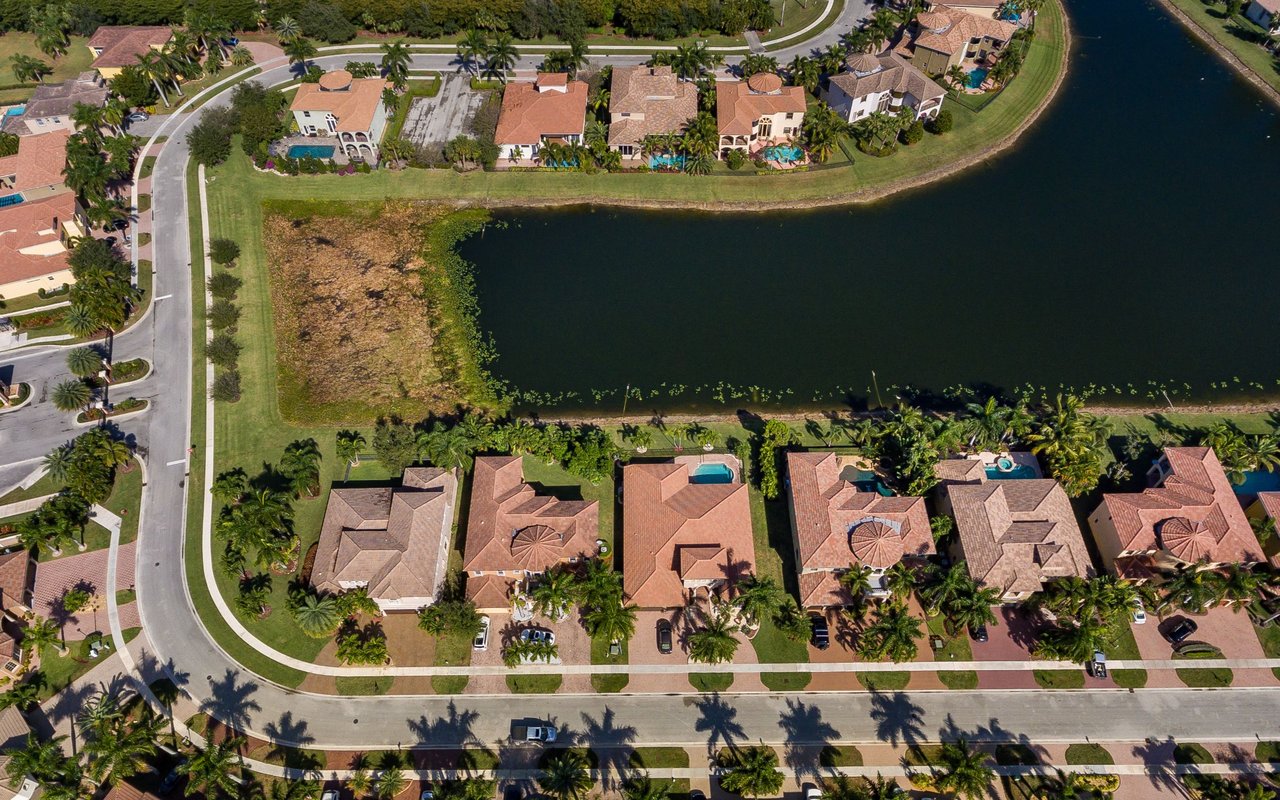
That combination, industrial-grade power infrastructure sitting inside a rural and equestrian-adjacent corridor, is exactly the kind of land use tension buyers in western Palm Beach County should expect to keep resurfacing. Arden, the residential community closest to the site, sits within roughly 1,000 to 1,200 feet of the parcel and includes Saddle View Elementary School. One commissioner said during the hearing that had the board known in 2016 what the site might become in 2026, she doubts they would have approved the elementary school nearby at all. That's not a comment about this specific vote. It's a comment about how differently the same zoning designation can play out a decade later.
If you're evaluating raw acreage or a large parcel anywhere along this stretch, the relevant question isn't "was the data center denied." It's "what does this parcel's underlying zoning entitle the owner to build, with or without a public hearing." Those are frequently two different answers.
The Numbers Behind The Noise And Water Fight
Part of what made this hearing unusual was how specific the technical debate got. Under Florida's Senate Bill 484, which took effect July 1, 2026, any data center drawing 50 megawatts or more triggers stricter regulatory hurdles and mandatory public hearings. Project Tango was projected to draw around 600 megawatts, twelve times that threshold, which is part of why it landed in front of commissioners at all rather than moving through routine permitting.
On sound, the developer's team presented a projection of roughly 50 decibels once built, compared with the county's 75-decibel limit for industrial uses. For context, the American Academy of Audiology places 50 decibels around the level of a running dishwasher or steady rainfall. On water, project manager Ernie Cox said the proposed closed-loop cooling system would use about 5,000 gallons a day, a small fraction of the roughly 500,000 gallons a day the Arden community itself uses for ordinary residential purposes.
Those numbers matter less as a verdict on whether the project is "safe" and more as a template. If a revised application returns, buyers and residents alike now know exactly which figures to ask for again: projected megawatt draw, projected decibel level against the county's 75-decibel ceiling, and daily water use against what the neighborhood already consumes.
Cox, describing how he expects the site to read once built, put it simply during one hearing: "You might drive by every day and not know it's there." Whether that holds up under an administrative approval with zero conditions attached is precisely the thing nobody can answer yet.
What To Ask Before You Look Seriously At Land In This Corridor
If you're comparing acreage in Loxahatchee against other western communities, a few questions will tell you more than the headline ever will:
- Does the parcel or the parcels near it carry an existing entitlement from before the current zoning debate, and does that entitlement include conditions of approval or none at all
- Is any pending application in this area moving through a public hearing process, or through administrative review handled solely by county staff
- What is the parcel's distance to the nearest industrial-zoned or power-generation infrastructure, since that proximity is often what makes a site attractive to this kind of development in the first place
- If a project was previously denied, was that denial "with prejudice" or "without prejudice," since the latter means the same or a similar plan can return
None of this means every parcel near Southern Boulevard is at risk of becoming an industrial neighbor. It means the July vote didn't settle that question one way or the other, and treating it as settled is the mistake to avoid.
A Few Direct Questions
Does "denied without prejudice" mean the land is rezoned back to purely agricultural or residential use? No. The denial applies only to the amendment PBA Holdings sought. The site's existing zoning and its 2016 entitlement for data center and warehouse space are unaffected.
Could a similar data center still get built on this exact site without another public vote? Yes, up to the scope of the 2016 approval, which can proceed through staff-level administrative review rather than a commission hearing.
How would a buyer even find out if that administrative process is moving forward? County zoning records are public and searchable, and local reporting from outlets like WFLX, CBS12, and WLRN has tracked this specific application closely enough that a revised or administrative filing is likely to surface quickly once submitted.
Land near a corridor like this one requires the kind of reading that goes past the vote count and into the entitlement history sitting underneath it. That's the kind of due diligence Welles Properties applies to every acreage and equestrian property search in western Palm Beach County. If you're weighing a parcel near this corridor or anywhere in Loxahatchee, schedule a confidential consultation with David Welles before you write an offer.