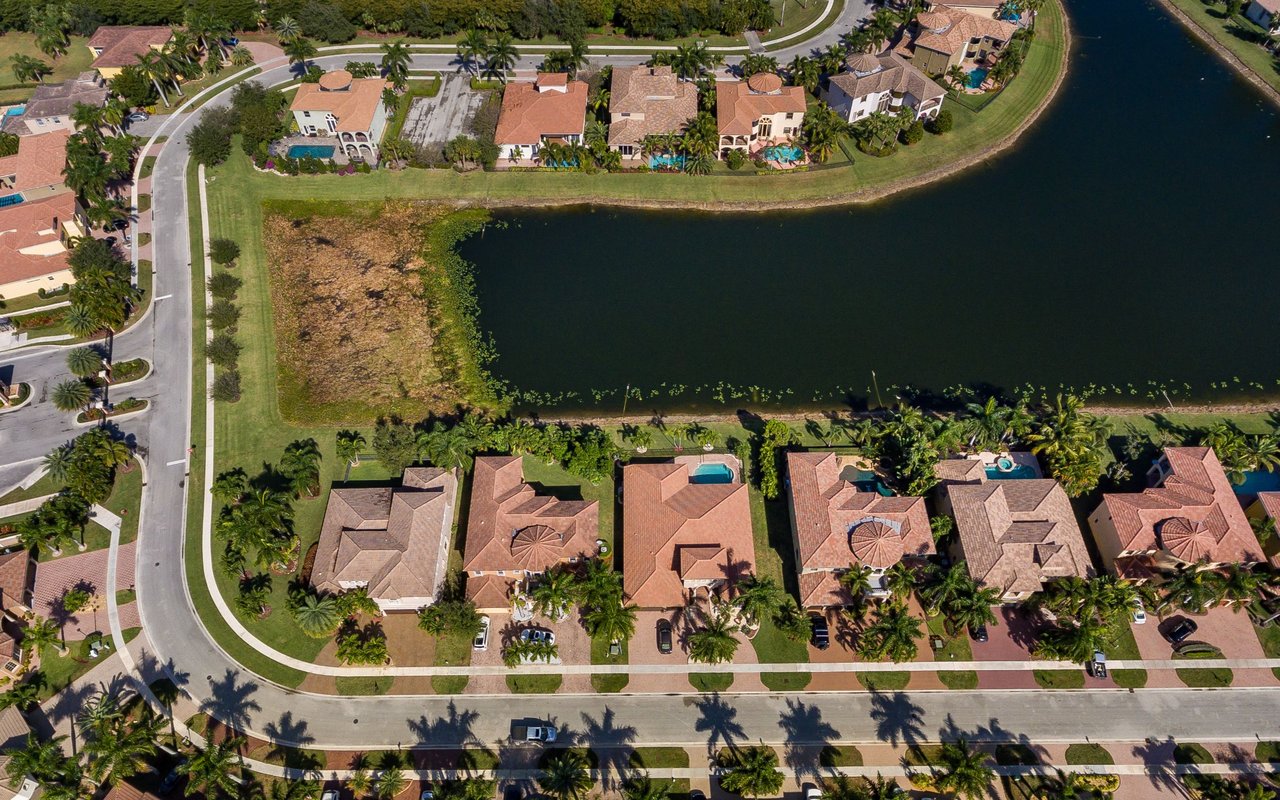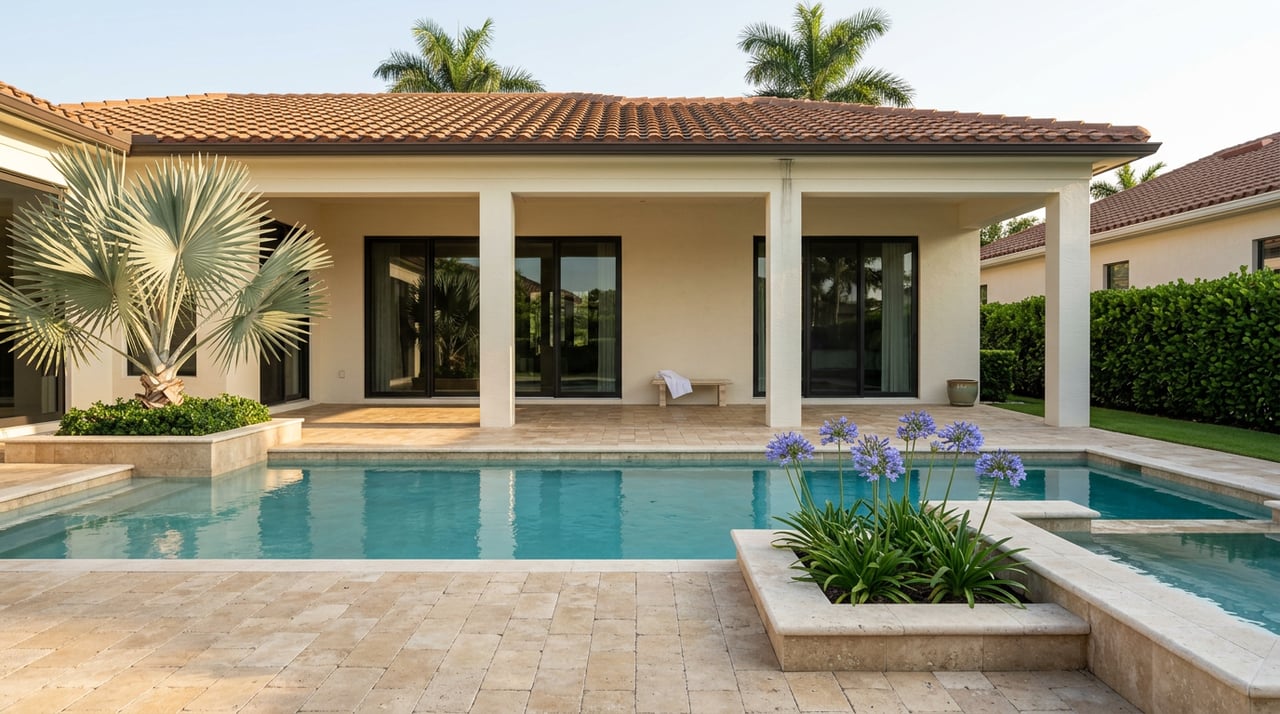
Drive south on State Road 7 past Forest Hill Boulevard this month and you pass a construction zone that will eventually hold a 180 room hotel, a private school campus, and a walkable retail village built by the same firm behind CityPlace in West Palm Beach. Turn onto South Shore Boulevard ten minutes later and you're on a road lined with clipped hedges and post and rail fencing, and nothing on the horizon suggests a hotel is going up anywhere near it. Both addresses say Wellington, FL. Only one of them is legally allowed to look like the first one.
That legal distinction is the part most people comparing Wellington listings never think to ask about. And right now, with one of the largest land deals in the village's recent history having just closed and another major site under contract a mile away, it's the difference that actually explains what your money is buying.
The number that doesn't add up
Start with a figure that should make you pause. The Mall at Wellington Green, the enclosed regional mall at Forest Hill Boulevard and State Road 7, has seen its taxable value collapse from a peak of roughly $246 million on the 2016 tax roll to somewhere around $70 million on the current one, based on Palm Beach County Property Appraiser figures cited in recent coverage. Nordstrom left in 2019. Two of the mall's five original anchors are gone. By any conventional reading, that's a corridor in retreat.
Except less than a mile away, land just traded for close to a million dollars an acre. In a deal that formally closed at the start of September 2026, Related Ross, the firm run by Miami Dolphins owner Steve Ross, paid $28.3 million for the 31-acre core of what was known as the K-Park site, a shade under $913,000 per acre, for raw land at the intersection of Stribling Way and State Road 7. That's not a distressed price. That's a bet that the corridor is about to be worth a great deal more than it is today.
Both things are true at once, and that's the point. The mall's collapse and Related Ross's premium land purchase are not contradictory signals about the same market. They're two different investment theses running through the same short stretch of State Road 7, and untangling them tells you more about Wellington than either fact does alone.
Two developers, one corridor, radically different bets
The mall's answer to its own decline is apartments. Bainbridge Companies, a Wellington-based developer, has an application before the Village to demolish the vacant Nordstrom building and construct 620 apartment units across three seven-story towers on the 18.4-acre site, under a contract reported at roughly $36 million with the mall's court-appointed receiver, Spinoso Real Estate Group. Village Manager Jim Barnes has described the plan as a mix of one, two, and three bedroom units with shared amenities and a parking structure. As of this writing the project has not been approved and no construction timeline has been set. It's still working through Village review.
Less than a mile south, Related Ross is building something with the opposite premise. Village Landing, on the roughly 71 acres it now controls at Stribling Way and State Road 7, is expected to break ground this fall, having just closed on the land at the start of September. The project is set to include more than 80 shops, over 100,000 square feet of restaurant space, a 180-room hotel, roughly 90,000 square feet of office space, and Wingrove Academy, a new private school expected to open in fall 2029 with an initial enrollment of about 1,000 students growing toward 1,750, backed by a $10 million scholarship fund for Wellington families. Company executives have described the goal as farmers markets, holiday festivals, and fun runs woven into a lakefront village square, not a strip center.
Neither project is happening in isolation. Within roughly the same corridor, Mark Bellissimo's Wellington project is adding 253 homes and a golf course, and Brefrank has won approval for 220 luxury apartments on public land just west of the mall. Add those together with the mall's own 620 units and Village Landing's residential component, and the State Road 7 corridor is absorbing well over a thousand new residential units inside a few years, alongside hundreds of thousands of square feet of new retail, restaurant, and hotel space.
That is an enormous amount of density landing in one part of the village. And almost none of it is happening anywhere near the horses.
Why none of this crosses into horse country
Wellington's equestrian core, the Saddle Trail, Grand Prix Village and Farms, Palm Beach Point, and Palm Beach Polo & Country Club neighborhoods that make up its show-season identity, sits inside a legally defined 9,000-acre Equestrian Preserve Area. The Village adopted the Equestrian Overlay Zoning District in 2003 specifically to regulate what can be built there, and voters affirmed that protection again in a 2016 referendum. The zoning isn't a planning preference the council could quietly walk back at a workshop. It's an overlay written into Wellington's land development regulations, reviewed by a standing Equestrian Preserve Committee that meets monthly and reports directly to the Village's planning board on land use decisions inside the preserve.
That's why a hotel, a private school, and 620 apartments can all be moving through approvals on State Road 7 in the same year without any of it touching a barn, a bridle path, or an arena a few miles south. The corridor absorbing density and the preserve holding its character are not two neighborhoods drifting apart naturally. They're two zones operating under two different rulebooks, by design, since 2003.
Here's the difference in practice:
| State Road 7 corridor | Equestrian Preserve Area | |
|---|---|---|
| Governing framework | Standard commercial and multifamily zoning, master plan amendments | Equestrian Overlay Zoning District (est. 2003), 9,000 acres |
| What's landing now | Village Landing (hotel, retail, school), 620 mall apartments, hundreds more units nearby | Farms, barns, arenas, low-density residential, over 100 miles of bridle trail |
| What changes for a buyer | Daily convenience, retail access, new tax base, added traffic | Almost nothing structural, protected land use since 2003 and again by 2016 referendum |
What this means if you're comparing Wellington addresses
If you're searching listings under a single heading called Wellington, you're looking at two markets with different drivers wearing the same city name. A property near Village Landing or the mall corridor will likely see its daily convenience improve over the next few years, more dining options, market-style retail, a walkable town square, alongside the traffic and construction disruption that comes with roughly a thousand new units arriving nearby. A farm on Saddle Trail or a compound in Grand Prix Village isn't plugged into that story at all. Its value moves on trail access, barn quality, and proximity to Wellington International, not on whether Village Landing lands its anchor tenants on schedule.
The practical move, if you're comparing properties across these zones, is to ask specifically which side of the Equestrian Overlay Zoning District line a listing sits on before you compare it to something a few miles away. Two addresses can both say Wellington and answer to entirely different sets of rules about density, land use, and what your neighbor is allowed to build next door.
A few direct questions
Does the Village Landing or mall redevelopment affect equestrian preserve property values? Not directly, and not by zoning design. The two areas answer to separate land use frameworks, and the preserve's protections have held since 2003 and were reaffirmed by a 2016 voter referendum. Indirect effects, like broader interest in Wellington as new dining and retail options open, are possible but distinct from the density itself reaching preserve land.
Can the Equestrian Preserve Area's zoning change? It's a Village-adopted overlay, not a permanent state or federal designation, so in theory it could be revisited through the Village's own planning process. In practice it has stood for over two decades and was specifically reaffirmed at the ballot box in 2016, which is a higher bar than a routine council vote.
Is Village Landing within riding distance of the show grounds? No. It sits at Stribling Way and State Road 7, a commercial corridor location outside the Equestrian Preserve Area, not inside the bridle trail network that connects farms to Wellington International.
Wellington's dual identity isn't a contradiction to untangle before you buy. It's the actual structure of the market, and knowing which side of the zoning line a property sits on tells you more about its future than a median price ever will. If you're weighing a farm inside the preserve against a property near the changing SR-7 corridor, or you need someone who can read a listing's zoning status the way you'd read a barn's stall count, Welles Properties can walk you through both markets. Schedule a confidential consultation with David Welles.