If you are bringing horses to Wellington for show season, you want a property that works as hard as your program. Buyers and renters here look for farms that are turnkey for training, horse care, and daily logistics. In this guide, you will learn what “show-ready” means in Wellington, how specific features affect value, and what to check or upgrade before you list or buy. Let’s dive in.
What “show-ready” means in Wellington
Show season in Wellington centers on the Winter Equestrian Festival and the Adequan Global Dressage Festival. Competitors expect the same level of care, footing, and efficiency at home that they get at the showgrounds. A show-ready farm blends physical infrastructure with smooth operations so horses can train, recover, and ship with minimal friction.
In practice, that means well-built arenas with fast drainage, safe and functional barns, thoughtful turnout, easy rig access, and legal bridle path connectivity. It also includes staffing, utilities, biosecurity, and compliance that meet professional standards. Buyers value properties that reduce setup time, operating risk, and conversion costs.
Arena footing and drainage essentials
The arena is the engine of your program. In Wellington’s climate, buyers look for engineered footing that protects soundness and rides well after heavy rain. A strong arena typically includes:
- A multi-layer build with a compacted structural base, drainage layer, shock-absorbing layer, and a consistent surface mix.
- Effective subsurface drainage, often with perimeter drains and geotextile fabric, to prevent saturation.
- A watering system and the equipment to groom and condition the surface daily.
For dressage, a regulation 20x60 meter arena with level, uniform footing is the standard. For jumpers, a well-sized ring that supports schooling and gymnastic work is expected, with space for additional warm-up. Buyers will ask when the footing was last resurfaced and how quickly the ring drains after a storm. Professionally built, resilient footing is a high-value feature in this market.
Lighting and arena safety details
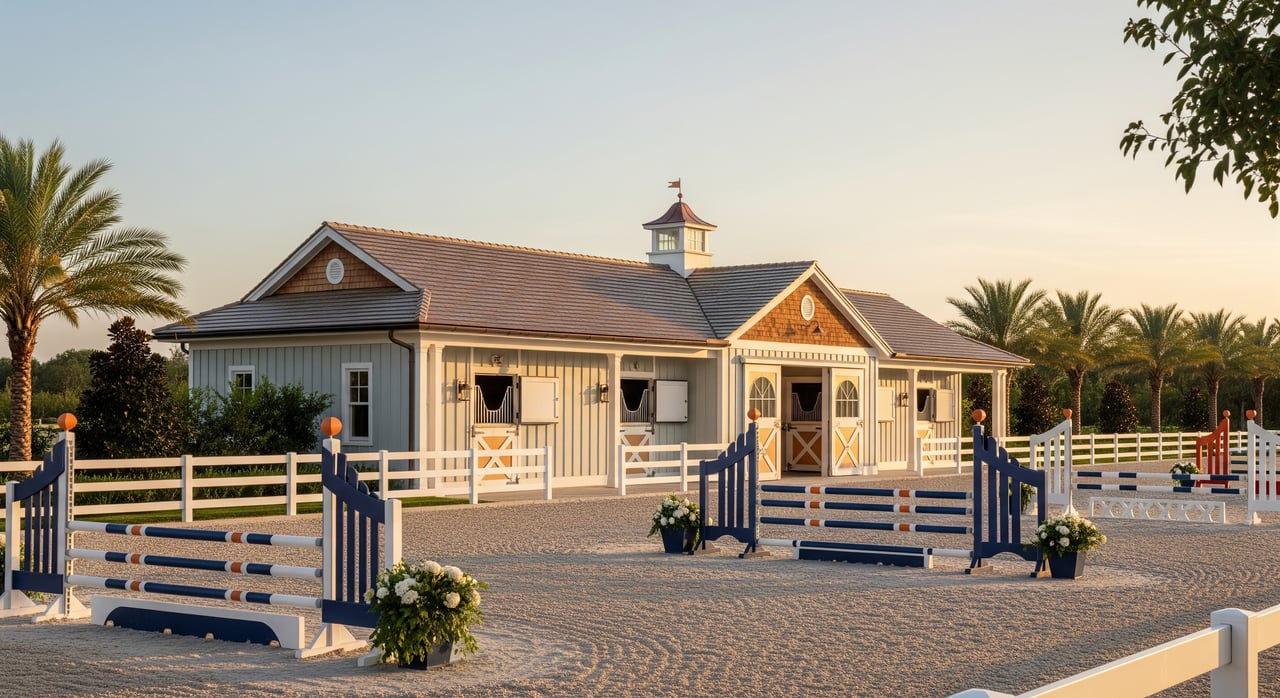
Evening rides are common during show season. Pole-mounted lighting with broad, even coverage and minimal glare helps you keep a consistent schedule. Safe fencing, clear spectator or trainer zones, mounting blocks, and organized storage for jumps support daily training. Companion spaces like a round pen or lunging area with proper footing add flexibility to your program.
Barn layout and stall standards
Buyers expect a barn that functions like a professional operation. Key features include:
- Stalls in standard 10x10 or 12x12 sizes, with larger stalls preferred for competition horses.
- Wide, level aisles with non-slip surfaces, good ventilation, and drainage.
- Tack rooms, feed rooms, and wash racks with hot and cold water.
- Grooming areas or solariums, accessible electrical outlets, and safe, bright lighting.
- Clear fire and safety plans with extinguishers, emergency egress, and driveway access for emergency vehicles.
A barn that offers both 10x10 and 12x12 stalls, plus an isolation or foaling stall, will appeal to a wider pool of buyers and trainers.
Paddocks and turnout planning
Turnout supports both soundness and sanity. In Wellington, thoughtful paddock design improves usability and value. Aim for:
- Multiple paddocks of varying sizes for individual and small-group turnout.
- Safe, durable fencing such as wood post and rail, vinyl-coated, or high-grade pipe with secure gates.
- Cross-fencing for rotation and rest, plus natural or built shade.
- Good drainage and pasture management to reduce mud and hoof damage.
Buyers prefer paddocks that connect easily to barns and arenas without crossing busy driveways. A clean, well-drained layout signals careful management.
Trailer and rig access
Show programs bring large trucks and multi-horse trailers. Properties that welcome big rigs without tight maneuvers rise to the top. Focus on:
- A wide, secure gate and a driveway built to support heavy loads.
- A hard-surfaced, level parking or turnout pad with room to unhitch and prep horses.
- A clear turning radius and simple entrances and exits.
Sellers should know the gate width, driveway surface, and turning paths. Photos of rigs on site help buyers visualize access.
Bridle path connectivity
Wellington’s bridle path network is a major advantage. Buyers look for:
- Documented legal access or easements to community bridle paths.
- Safe, well-maintained connectors and road crossings.
- Awareness of any HOA or program rules on use and hours.
Direct, legal access and proximity to main routes can tip a decision in your favor. Be ready to show maps and easement documents.
Operations that signal readiness
A property can have great bones and still fall short if operations are not dialed in. Show-ready farms pair infrastructure with reliable systems.
Staff and housing
Professional programs need stable staffing and often on-site housing. Buyers want to see:
- A self-contained apartment or accessory dwelling with a bathroom and kitchenette.
- Proper permits and compliance with local zoning.
- Practical proximity to the barn with privacy for residents.
Permitted, habitable staff housing is a major plus for trainers and multi-horse owners.
Utilities, water, and irrigation
Arena quality starts with water. Show-ready utilities include:
- Ample potable water and multiple hydrants around the barn.
- Hot and cold water at wash racks for care and therapy.
- Irrigation capacity for arenas and dust control.
- Reliable electrical service sized for barn loads, with a backup generator as a bonus.
- Proper septic capacity or a sewer connection for barns and living spaces.
Documenting capacity, locations, and recent upgrades gives buyers confidence.
Manure management and compliance
A clean, compliant manure plan protects your operation and your neighbors. Buyers expect:
- A designated composting area or pad with runoff control.
- A regular removal schedule and records.
- Awareness of Palm Beach County standards for nutrient management and setbacks.
Good manure management reduces environmental risk and supports lender and insurance comfort.
Biosecurity and veterinary access
Programs that ship in and out need clear biosecurity. Buyers look for:
- A dedicated isolation stall or area for new or sick horses.
- Separate equipment storage and clear sanitation routines.
- Proximity and access to local veterinarians, farriers, and emergency clinics.
These practices mirror showground protocols and help protect training schedules.
Maintenance workflow and costs
Show-level maintenance is hands-on and recurring. Be ready to document:
- Daily arena grooming and watering schedules.
- Stall cleaning routines and bedding usage.
- Fence upkeep, pasture rotation, and irrigation timing.
- Vendor contacts and annual operating costs.
Clear records help buyers forecast expenses and plan staffing.
Permits, HOAs, and land use
No one wants surprises after closing. Smart buyers will review:
- Zoning for equestrian use, animal counts per acre, and permitted activities such as boarding or training.
- HOA covenants, conditions, and restrictions that affect improvements or operations.
- Easements tied to bridle paths and access routes.
If your property is permitted for commercial activities, highlight it. That can be a significant advantage.
How readiness translates to value
Show-ready features expand your buyer pool to include professional trainers, competitive families, and small commercial operations. The biggest value drivers are:
- Professionally built arenas with engineered drainage and conditioning systems.
- A barn with standard stall sizes, tack and feed rooms, and hot-cold wash racks.
- On-site, permitted staff housing.
- Rig-friendly access and legal bridle path connectivity.
- Clean manure management and documented compliance.
Gaps in any of these areas can slow interest, draw lower offers, or prompt repair credits. A targeted pre-listing plan often pays for itself in a stronger sale price and smooth negotiations.
Seller readiness checklist
Use this quick checklist to prep your farm for market:
Arena and footing
- Footing construction details and date of last resurfacing.
- Proof of subsurface drainage and photos after heavy rain.
- Watering and conditioning equipment included in the sale.
Stabling and barn amenities
- Stall sizes and counts, aisle width, and surface details.
- Tack, feed, and wash rack specs with hot-cold water.
- Electrical capacity and any recent upgrades.
Paddocks and fences
- Map of paddock sizes, cross-fencing, and shade or shelter.
- Fencing types and recent repairs.
Trailer access and parking
- Gate width, driveway surface, and turning radius.
- Trailer pad construction and capacity.
Staff housing and operations
- Permits and description of on-site housing.
- Typical staffing plan and monthly operating costs.
Utilities and environmental
- Septic or sewer records and water supply capacity.
- Manure management plan and compliance documentation.
Connectivity and legal access
- Legal bridle path easements and nearby trailheads.
- HOA or CC&R rules relevant to operations.
Maintenance and vendors
- Arena grooming and irrigation schedules.
- Contacts for footing contractors, vets, farriers, and service providers.
Buyer due diligence checklist
If you are buying, verify these items to protect your investment:
- Footing installation records and the date of last resurfacing.
- Drainage plans, storm photos, and any warranties.
- Barn structure, electrical, plumbing, and fire safety compliance.
- Water supply, hydrant locations, irrigation systems, and septic permits.
- Zoning, permits, HOA rules, and bridle path easements.
- Manure management plan and county compliance.
- Staff housing permits and occupancy rules.
- Gate width, driveway specs, turning radius, and trailer pad.
- References from local trainers or veterinarians on property suitability.
Next steps: position your farm for season
A show-ready farm in Wellington blends strong infrastructure, polished operations, and clear documentation. If you are selling, start with the arena, stall details, staff housing, rig access, and bridle path connectivity. If you are buying, focus due diligence on footing, drainage, permits, and operating costs. The right plan will help you move in, tack up, and get to work without delay.
If you want a confidential, technically informed review of your property or a targeted search for a farm that fits your program, reach out to David Welles. You will get a clear, practical path to show-ready.
FAQs
What defines a “show-ready” farm in Wellington?
- A property that supports show-level training and horse care with engineered arenas, safe barns, efficient turnout, rig access, bridle path connectivity, and dialed-in operations.
What arena size and footing do buyers expect?
- Dressage buyers expect a regulation 20x60 meter arena with consistent footing, while jumpers want a well-sized schooling ring and warm-up area with engineered drainage.
How important is staff housing on-site?
- Permitted, self-contained staff housing is highly desirable because it supports daily care and trainer schedules, and it can expand your buyer pool.
What should I document about utilities and water?
- Map hydrants, confirm hot-cold wash racks, show irrigation capacity for arenas, list electrical service size, and include septic or sewer records and maintenance.
Do buyers care about manure management?
- Yes. A designated storage or composting plan, removal schedule, and county-compliant runoff control reduce risk and are viewed favorably by buyers and lenders.
Why does bridle path access affect value?
- Legal, convenient access to Wellington’s bridle path network saves time, improves daily routines, and is a differentiator for show season logistics.
What are the biggest red flags for buyers?
- Poorly drained arenas, undersized or unsafe stalls, tight trailer access, lack of permits for housing or operations, and unclear manure or zoning compliance.