Dreaming of more acreage minutes from major shows without the layers of neighborhood rules you see in Wellington? If you are a trainer, rider, or investor, Loxahatchee Groves offers a rural, equestrian-friendly setting with real operational potential. In this guide, you will learn how parcels are zoned, what farm infrastructure is typical, the permits that matter, and the practical tradeoffs to expect. Let’s dive in.
Why Loxahatchee Groves
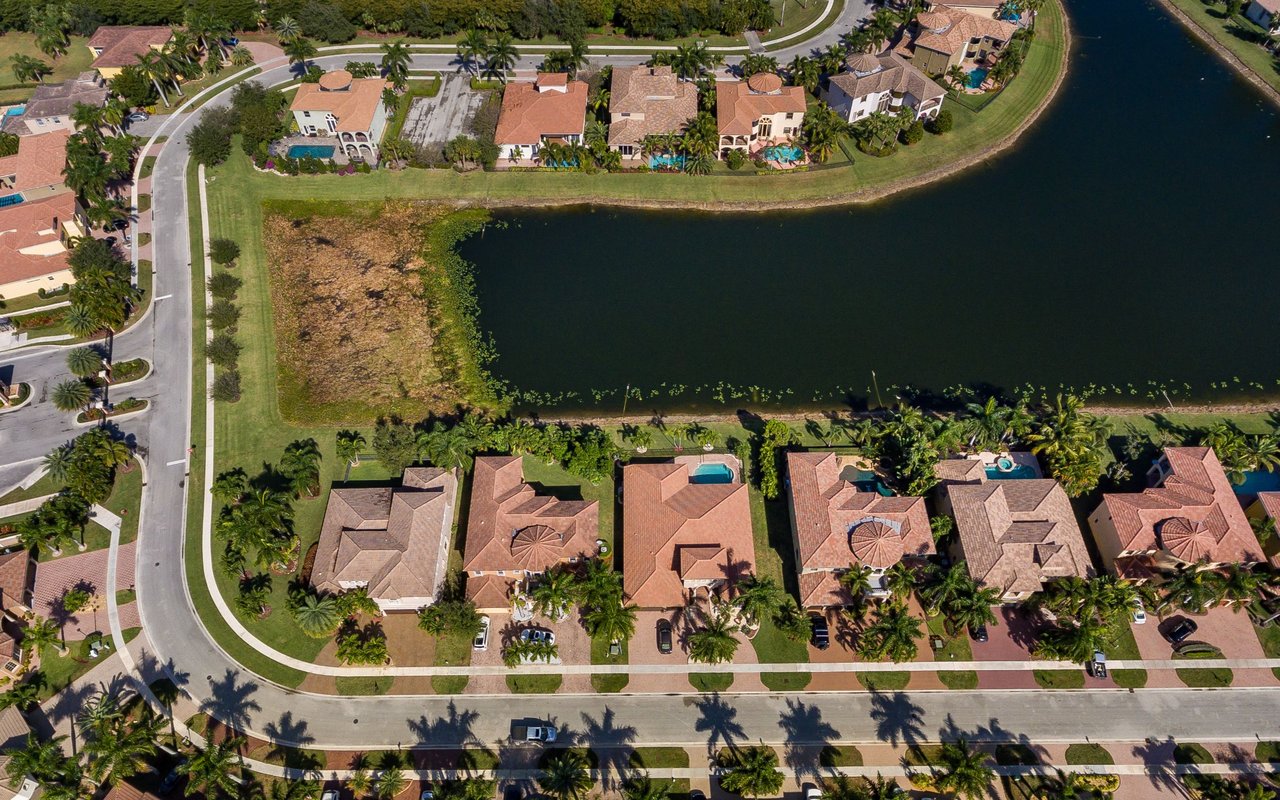
Loxahatchee Groves is a small town in western Palm Beach County that prioritizes a rural, agricultural character. The Town’s comprehensive plan highlights coordinated planning with the County while preserving that low-density feel. You get room to build and run a working operation while staying close to Wellington’s show circuit.
Service levels reflect the rural tier. Many properties rely on private wells, on-site septic, and drainage managed by the local water-control district rather than centralized utilities. That setup can affect permitting, site design, and costs for barns, wash racks, and arenas. Confirm utility capacity and approvals early.
- Learn about the Town’s planning goals in the comprehensive plan: Town of Loxahatchee Groves Comprehensive Plan
- See regional context for the rural tier and services: FIU study of Central Western Communities
Zoning basics: AR and FLU
Most of Loxahatchee Groves sits in Palm Beach County’s Rural Tier and is dominated by Agricultural-Residential (AR) zoning. In AR, the minimum lot size you must follow depends on the parcel’s Future Land Use (FLU) subcategory. Common FLU designations include RR-20, RR-10, RR-5, and RR-2.5, which tie to minimums of 20, 10, 5, and 2.5 acres.
Because allowable uses, setbacks, and coverage flow from the FLU, you should confirm both the zoning and the FLU for any parcel you are evaluating. A zoning confirmation letter is a smart first step before you commit to a plan or contract. Review the County’s ULDC resources for details on Property Development Regulations.
- County ULDC reference and PDR tables: Palm Beach County PZB reference
When a stable becomes “commercial”
There is a clear difference between keeping your own horses and boarding or training for clients. County rules define a “commercial stable” in part by the number of non-owner horses and by activities such as boarding, lessons, training, or breeding. Crossing that line can require zoning approval and an Animal Care and Control (ACC) operational permit.
Expect inspections and site conditions as part of any approval. This is routine for professional facilities and is important to plan before you scale up.
- Definition and permit context: Palm Beach County ACC ordinance summary
Taxes: agricultural classification
If you plan to operate commercially, Florida provides a potential tax benefit known as agricultural classification. Under Florida Statute 193.461, properties in bona fide commercial agricultural use may be assessed on use value. For horse farms, that often means keeping solid records of income-producing activity.
Palm Beach County’s Property Appraiser administers the program and will require documentation. Application timing and evidence standards matter, so plan ahead with your tax advisor.
- Statute overview: Florida Statute 193.461
- County program details: Palm Beach County Property Appraiser agricultural classification
What working farms look like
You will find a mix of parcel sizes, with 5-acre tracts common and many 10 to 20-plus acre holdings available. Some smaller legal lots exist, and they may be buildable depending on setbacks and Property Development Regulations. This variety supports everything from boutique training barns to full boarding programs.
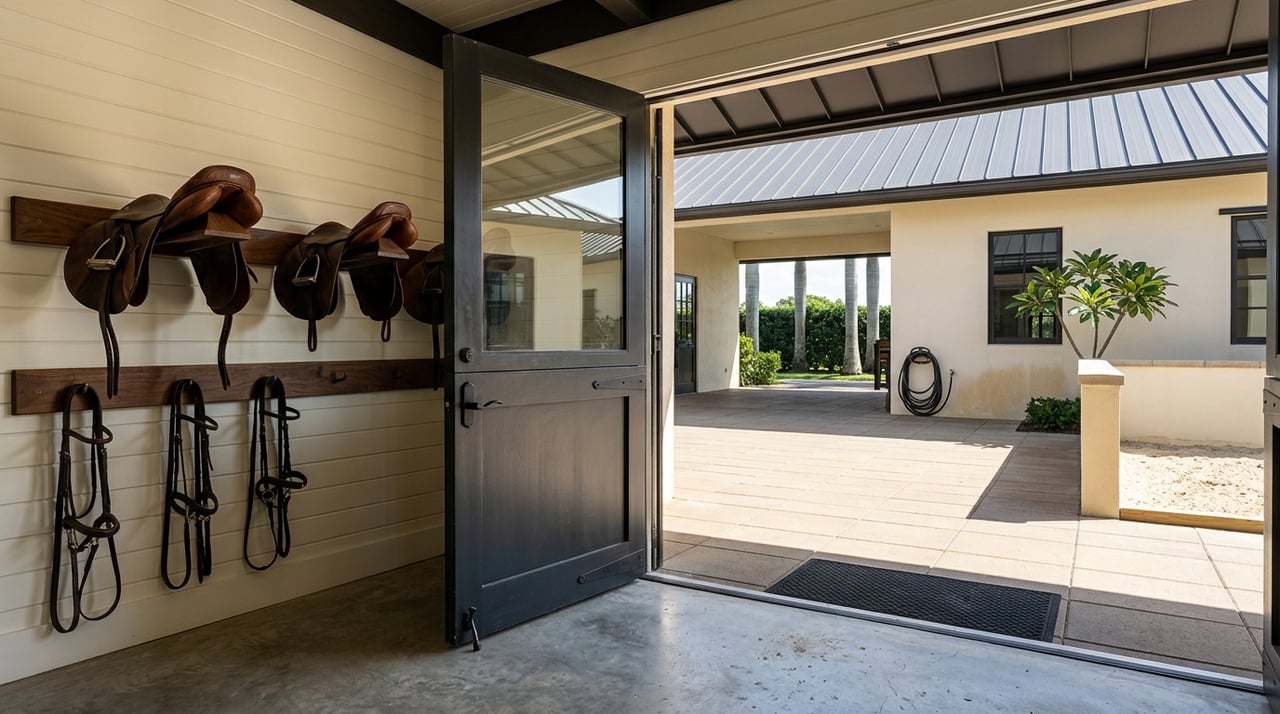
Barns often feature center-aisle or shed-row layouts with 12-by-12 to 14-by-14 stalls, multiple wash racks, tack and feed rooms, and practical additions like fly systems, water lines to paddocks, and backup generators. Larger facilities commonly include staff quarters or an owner’s apartment on site for operations.
Arenas, sizes, and footing
Outdoor schooling arenas often start near 60 by 120 feet, which supports most day-to-day work. Dressage trainers who need a full court should plan for a 20 by 60 meter footprint. Jumping programs usually want larger outdoor or covered arenas, often with lighting for evening rides.
Footing and drainage are usually the most significant site costs after the barn itself. A proper build includes a compacted base, drainage layers, and a surface blend that matches your discipline. Budget for construction and ongoing maintenance to protect your horses and your investment.
- Competition dimension reference: FEI venue requirements
Pastures, stocking, and manure
In South Florida, stocking rates depend on forage, irrigation, and management. A practical planning range is about 1 to 2.5 acres per mature horse when pastures are well managed, with rotational paddocks and a sacrifice area to protect turf during wet periods or heavy use. Manure handling is a daily reality, so set aside space for stockpiling and removal or composting.
- Florida-specific pasture guidance: UF/IFAS EDIS for horse pastures
Utilities, drainage, and roads
Because many properties rely on private wells, on-site wastewater, and local canal systems, your site plan should address water supply, septic capacity, and stormwater from the start. Some roads and driveways are still unpaved, which affects rig access and material deliveries. Confirm your access, driveway culvert permits, and any assessments with the water-control district.
- District contacts and resources: Loxahatchee Groves Water Control District
Common operating models
- Hobby owner: You keep your own horses with minimal boarding activity, usually under the commercial threshold.
- Trainer with limited boarding: You live on site, train, and board a modest number of client horses, which may trigger commercial-stable rules.
- Full boarding/training facility: You run a multi-stall operation with formal staffing, paddocks, and arenas that require zoning confirmation and ACC permitting.
Due diligence checklist
Use this quick list as you evaluate a property’s fit and feasibility:
- Confirm both zoning and FLU for the parcel, and request a zoning confirmation letter from the County. Review ULDC PDR tables to understand minimums and setbacks. Palm Beach County PZB reference
- If you plan to board or train, verify whether your scale meets the “commercial stable” definition and whether a conditional use or ACC operational permit is required. ACC ordinance summary
- Ask the Town and County about building permits, wind ratings, and stormwater needs for barns and covered arenas.
- Discuss wells, septic, and wash-rack water with the health and utility authorities, and coordinate with the local water-control district on drainage and access. Water Control District
- If agricultural classification is a goal, note application deadlines and documentation standards with the Property Appraiser. PBC agricultural classification
- Size your pastures and paddock rotation plan using UF/IFAS guidelines, and budget for manure handling. UF/IFAS horse pastures
- For competition-focused programs, plan arena dimensions to match your discipline and schedule lighting if you ride after dark. FEI dimensions
- Consider a pre-application conversation with County staff if your plan is complex or includes covered structures. County zoning resolutions and contacts
How it compares with Wellington
Loxahatchee Groves typically offers larger parcels at more accessible per-acre pricing than Wellington’s core neighborhoods. You will also find fewer community covenants, which makes it easier to tailor barns, arenas, and paddocks to your program. The big plus is proximity to WEF and other venues, which keeps daily travel times reasonable.
The tradeoffs are practical. You will likely rely on wells and septic, manage drainage with the local district, and navigate a mix of paved and unpaved roads. That rural framework works well for many operations, as long as you plan utilities, access, and emergency services during due diligence.
Ready to evaluate a Loxahatchee Groves site with clear next steps and a realistic budget for barns, footing, and utilities? Schedule a confidential, technical walk-through and market conversation with David Welles.
FAQs
What makes Loxahatchee Groves attractive for working farms?
- You get larger parcels, fewer neighborhood covenants, and short drives to Wellington’s show venues in a town that prioritizes rural, agricultural character.
How do AR zoning and FLU affect minimum lot size?
- In the County’s AR district, the minimum lot size follows the parcel’s FLU subcategory, so you must confirm both zoning and FLU before planning any build.
When do I need a permit to board or train client horses?
- If your operation meets the County’s “commercial stable” definition, zoning approval and an Animal Care and Control operational permit are commonly required.
What arena size should I plan for dressage or jumping?
- Many schooling arenas start near 60 by 120 feet, while a full dressage court is 20 by 60 meters; jumping programs often prefer larger or covered arenas.
Can I qualify for Florida’s agricultural tax classification?
- If you operate a bona fide commercial agricultural use and document it, you may qualify for use-value assessment subject to County review and deadlines.